
The average American uses approximately 57 pounds of toilet paper per year per The Guardian's 2023 environmental reporting. At population scale that's roughly 19 billion pounds of paper produced, used, and discarded annually in the US alone. The chemistry of that paper, and the forest it comes from, both deserve a closer look than they generally get.
The PFA finding
A 2023 study published in Environmental Science & Technology Letters documented toilet paper as a significant input source of PFAs (per- and polyfluoroalkyl substances) into wastewater systems. PFAs are sometimes called "forever chemicals" because they don't meaningfully degrade in environmental or biological systems — they accumulate.
A 2021 Toxicology Reports review aggregated the PFA health-correlation literature, linking sustained exposure to decreased fertility, hypertension, certain cancer classes, and immune-system suppression. A 2025 Environmental Research paper documented PFA correlations with impaired testicular function in occupational-exposure cohorts.
The other documented additives in standard toilet-paper manufacturing chemistry include BPA, fragrance compounds, formaldehyde, chlorine bleach, and dioxins as a chlorine-bleaching byproduct. None of these are individually dose-limiting at the per-use exposure level; the accumulated-exposure profile over decades is the open question.
The forest the paper comes from
CBC documented in 2024 that Canada's boreal forest is a major sourcing region for North American virgin-pulp toilet paper. The marketing position of "softness" — the recurring product positioning across the major brands — is largely a function of virgin long-fibre pulp; recycled fibre delivers a marginally less "soft" finished product at substantially better environmental cost. The market signal has pushed manufacturers toward more virgin sourcing, not less.
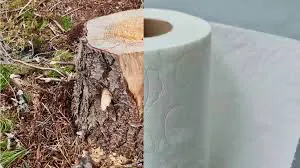
Procter & Gamble (Charmin's parent company) faced a 2023 class-action lawsuit alleging greenwashing on the company's "Protect, Grow, Restore" sustainability marketing — the suit argued the campaign's biodiversity-restoration claims were materially misaligned with the company's actual sourcing volumes from Canadian and Russian boreal regions.
Two practical alternatives
Who Gives A Crap (recycled paper / bamboo)
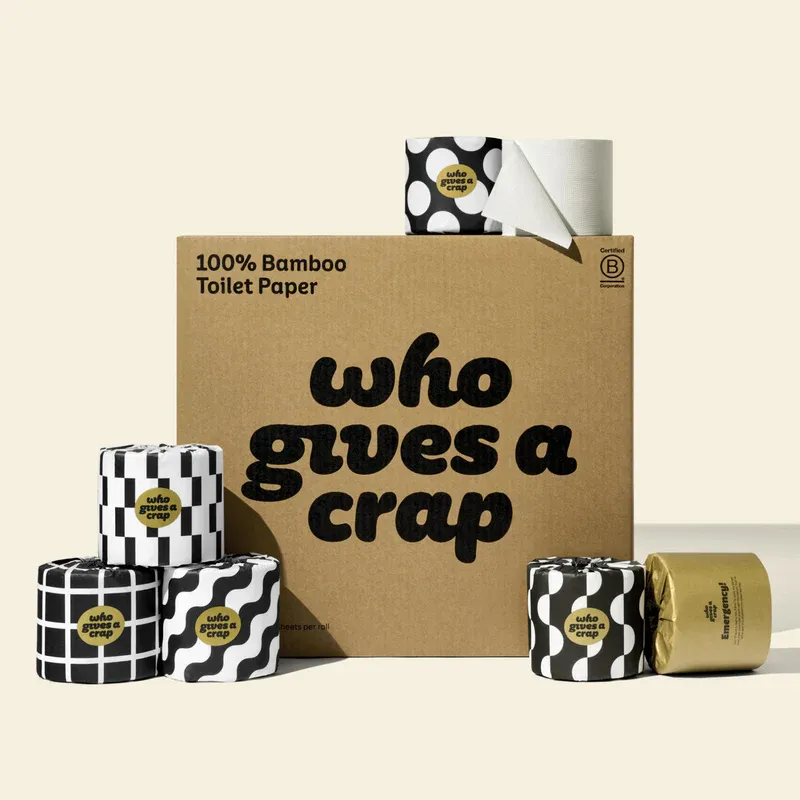
- 100% recycled paper and 100% bamboo lines (separate products).
- No chlorine bleach, no synthetic fragrances, no added dyes.
- The company's published commitment: 50% of profits to sanitation infrastructure in low-access regions; the company reports cumulative contribution at over $19 million.
Salaaz hasn't audited the impact-ledger accounting independently; the company's published reporting is the source.
The bidet upgrade
The other lever is reducing the volume entirely. Bidet attachments retrofit existing toilets at $30–$120 capital cost; they're standard infrastructure across much of South Asia, the Middle East, Mediterranean Europe, and South America.
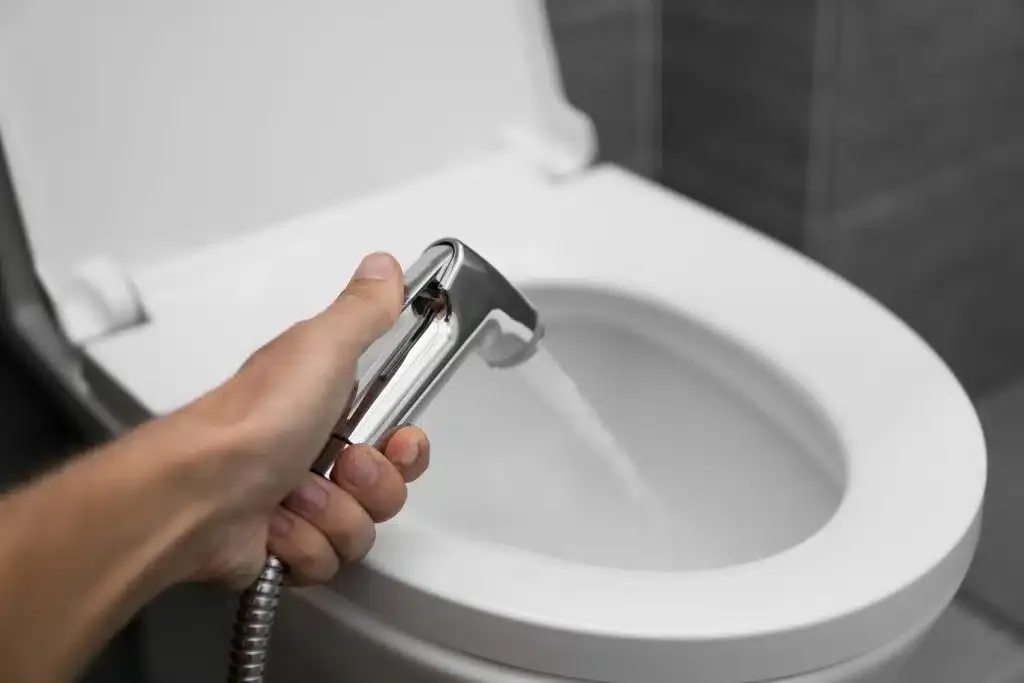
The arithmetic: a bidet uses roughly 1/8 the water of producing an equivalent volume of toilet paper, runs off existing plumbing, and amortises against paper purchases within 12–18 months at standard usage rates.
What follows
For adjacent reading, see our piece on microplastic exposure and household substitution, our look at greenwashing lawsuits and the corporate-marketing pattern, and our piece on water stewardship at the household level.