

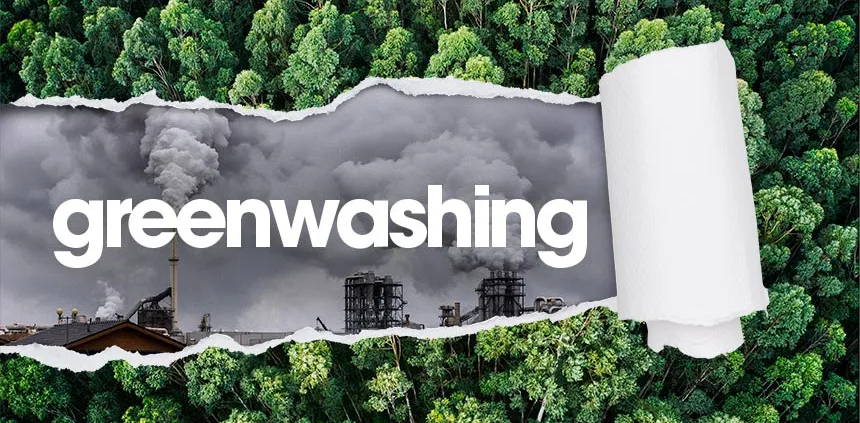
Greenwashing is the application of environmental-marketing language to corporate operations that do not, in operational fact, deliver the environmental claim. The pattern isn't subtle; the FTC, ASA (UK), and EU Commission all carry documented case-law portfolios on it. Four recurring tactics:
The recurring playbook
- Carbon-neutral via offset. A company purchases carbon credits from a forestry or renewable-energy project rather than reducing the emissions in its own operations. The accounting moves on paper without the physical emissions changing. The offset market has documented integrity problems — many credits sold do not represent real, additional, or permanent emissions reduction.
- "Eco-friendly" packaging. Green colourways and undefined adjectives — natural, conscious, mindful, green — on packaging that remains substantively unchanged in material composition.
- "Sustainable collection" within a fast-fashion line. H&M's Conscious line and similar capsules at Shein, Zara, and ASOS launch as a marketing subset against the parent company's continuing high-volume conventional operation. The capsule produces a press story; the operational baseline doesn't change.
- Fossil-fuel renewable PR. Shell, BP, and ExxonMobil promote small renewable-energy investments while continuing multi-billion-dollar fossil-fuel capital expenditure programmes. The marketing budget on the renewable side is often substantially larger than the operational investment.
Documented penalties
The pattern is sufficiently established that regulatory bodies have prosecuted multiple cases at substantial penalty levels:
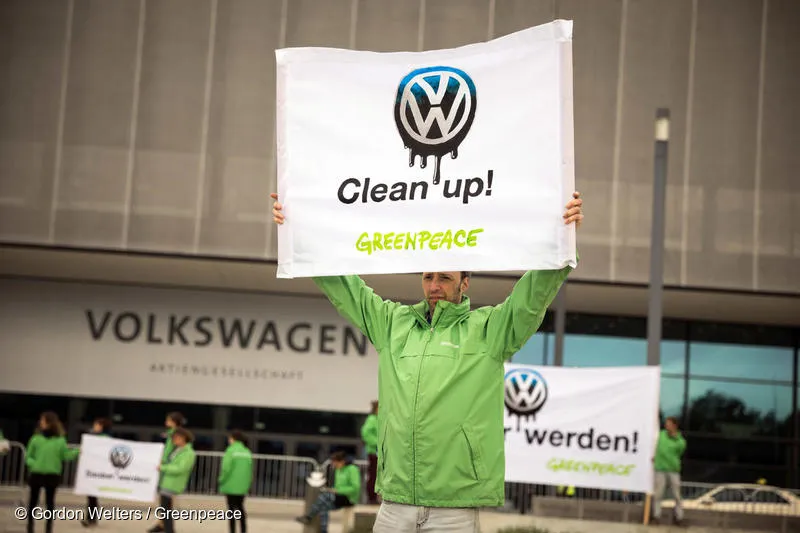
- Volkswagen — approximately $30 billion in cumulative penalties globally, including a $2.8 billion US criminal penalty for the defeat-device emissions fraud that rigged engine test results to read clean while operating dirty in real-world conditions.
- Coca-Cola — a $5 million USD penalty in 2024 for environmental-friendliness claims that contradicted the recyclability profile of the actual packaging.
- Nestlé — a $7 million USD penalty in 2024 for false representations on the ethical-sourcing of palm oil across several product lines.
- H&M — multiple regulatory complaints and litigation across Norwegian, US, and EU jurisdictions on the Conscious line's environmental claims.
What honest sustainability marketing looks like
The opposite of greenwashing isn't silence on environmental practice; it's disclosure with audit trails. Three specific patterns that distinguish substance from marketing:

- Third-party audited certifications — B-Corp, GOTS, Fair Trade, MSC, ASC, USDA Organic, EU Organic. These carry public criteria and revocation mechanisms; vendor-self-certified eco-claims don't.
- Quantified commitments with timelines. "We aim to be sustainable" is marketing. "We will reduce Scope 1 + 2 emissions by X% against a 2019 baseline by 2030, audited by Y" is a claim that can be measured.
- Multi-criteria reporting. A company reporting environmental performance only on its preferred metric (say, recycled content) while remaining silent on water use, labour, or end-of-life is selecting the metric that makes the company look best.
The structural reality on the industry side: a growing share of investor capital — over $2.7 trillion in self-described ESG-aligned funds globally per Wikipedia's standing aggregate — incentivises sustainability claims regardless of operational delivery. Regulatory enforcement will set the floor on how empty those claims can be. Consumer reading skills are the second floor.
What follows
For adjacent reading, see our piece on label engineering and the modifier-adjective pattern, our look at fast-fashion's "sustainable collection" capsule pattern, and our piece on reading organic certification specifically.