
A KitKat and a Coffee Crisp arrive on the shelf through a corporate parent — Nestlé — whose published record across multiple decades carries documented patterns the marketing rarely surfaces. Three of the patterns:
- Deforestation through the palm-oil supply chain. Rainforest Rescue documented that a substantial portion of Nestlé's palm oil sources from regions with documented deforestation activity, with company-commissioned audits identifying flagged suppliers across multiple production years.
- Water extraction from drought-stressed regions. A Business & Human Rights Resource Centre filing on Pakistan documented Nestlé Pakistan extracting and wasting water without compensation in groundwater-stressed districts, in violation of audit recommendations.
- Cocoa-supply-chain labour. Long-standing class-action litigation in US courts and ILO field studies have documented child-labour use in Nestlé cocoa supplier regions in West Africa, with intermittent corporate commitments to remediation that have not closed the gap.

Substitutions at the candy aisle
The substitutions don't require giving up the format. Three documented like-for-likes:
KitKat → IFFCO Tiffany Break

- IFFCO Group has published a commitment toward 100% deforestation-free palm oil sourcing on an audited timeline.
- Near-identical wafer-chocolate format and flavour profile.
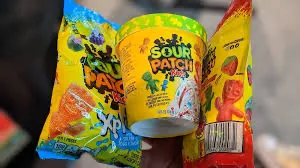
Sour Patch Kids (Mondelez) → Cheery Chews (Naseeb International)
Mondelez carries its own public-record concerns; Sour Patch Kids specifically has been a boycott target. A Canadian alternative:
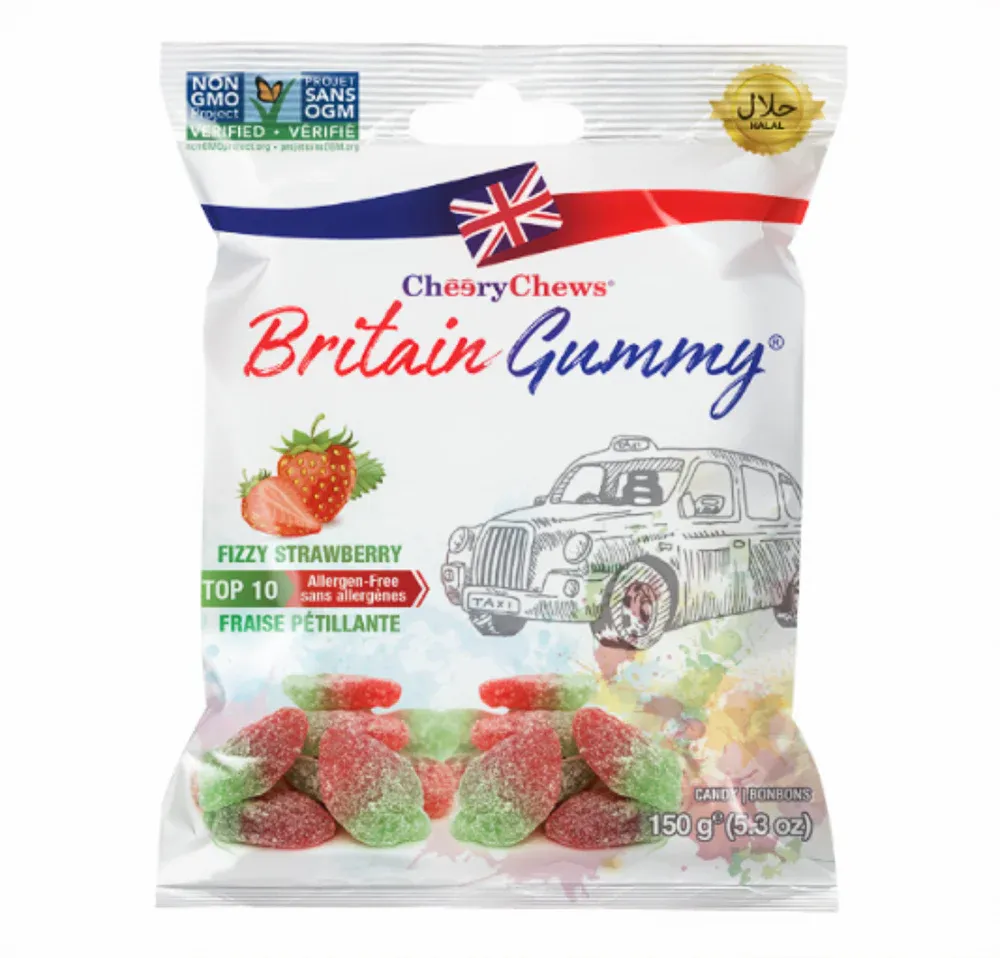
- Available across 50+ Ontario retail locations.
- Free of the top-ten common allergens per the manufacturer's published spec.
- Sub-brands: Gummy Rush, Britain Gummies, Marsh and Marlow.
- Non-GMO verified.
Salaaz hasn't independently audited either brand's full supply chain; published certifications and disclosures are the source.
Why this category is structurally hard to change
Ultra-processed confectionery is engineered to a documented set of optimisation targets. Three points worth understanding:
- The "bliss point." Food scientists at Nestlé, Kraft, and PepsiCo design fat / sugar / salt ratios that maximise the brain's dopamine reward response. The endpoint of the optimisation is sustained consumption against satiety signals — the chemistry overrides the body's fullness cues.
- Cognitive load over time. A 2023 JAMA Neurology cohort study following over 10,000 individuals over 8 years documented associations between sustained ultra-processed food intake and measurable cognitive decline plus brain-volume reduction.
- Additives with unresolved long-term profile. Health Canada's titanium dioxide reassessment and the WHO IARC classification of processed meats as Group 1 carcinogens (same category as tobacco) point to a pattern: regulatory science updates faster than the industry reformulates.
What follows
The point isn't that candy is uniquely evil. It's that the engineering is designed to override the body's stop signals, and the corporate record around sourcing is independently documented. Reading the wrapper before the label is the consumer-facing test.
For adjacent reading, see our piece on the snack-marketing pattern targeted at children, our broader look at the grocery-store ultra-processed economy, and our piece on soda chemistry and the Coca-Cola/PepsiCo market share.