
A spice is the most concentrated commodity in a kitchen. A spoonful represents days of harvest labour, sometimes weeks; the supply chain that delivers it is one of the oldest globalised trades on record, and its labour-economic patterns reflect that history.
The supply-chain inheritance
The colonial cultivation patterns aren't only history. The current global-value-chain economics still concentrate margin at the retail and processing tiers, with farm-gate compensation routinely a single-digit percentage of retail. Three specific cases:
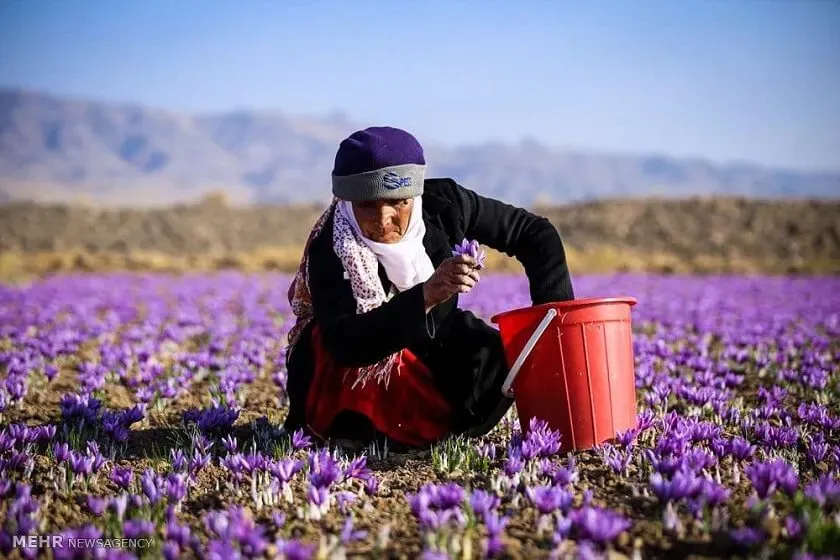
- Saffron is over 80% sourced from Iran. The crop requires hand-harvesting of stigmas from individual crocus flowers — among the most labour-intensive agricultural products globally. Production runs largely on women's labour at compensation rates documented well below regional minimum wage.
- Vanilla sourcing is heavily concentrated in Madagascar. The Guardian's 2016 investigation documented child-labour patterns and acute rural poverty across the vanilla-export economy, with farm-gate compensation that hasn't kept pace with retail-end vanilla price spikes.
- Chili peppers carry two documented supply chains worth noting: the US Department of Labor's listing includes Xinjiang chili production under documented forced-labour patterns, and the Los Angeles Times' 2014 multi-part investigation documented child labour across the Mexican export-pepper sector supplying US grocers.
What the evidence on each spice actually shows
Turmeric carries an outsized share of the wellness-marketing attention. The clinical evidence base supports a broader range:
- Cumin — a 2014 Middle East Journal of Digestive Diseases paper documented significant IBS symptom reduction at sustained doses.
- Cloves — among the highest measured antioxidant content per gram across plant foods per a 2010 Nutrition Journal review.
- Ginger — a 2000 British Journal of Anaesthesia review documented established antiemetic effect across multiple clinical settings.
- Cinnamon — a 2019 Diabetes Research and Clinical Practice paper found documented blood-glucose-regulation effects in type-2 diabetes cohorts.
- Saffron — a 2015 Journal of Integrative Medicine review found measurable depression-symptom-reduction effects at clinical doses.
- Black pepper paired with turmeric — a 2024 Frontiers in Nutrition paper documented enhanced curcumin absorption when paired with piperine at the standard culinary ratio.
Two caveats the marketing doesn't surface
- Cassia vs Ceylon cinnamon. Cassia (the cheaper variety) carries coumarin at concentrations that produce hepatotoxic risk at sustained intake. Ceylon cinnamon is the safer variety for daily use. Most ground supermarket cinnamon is Cassia.
- Turmeric overuse. A 2024 UCLA Health overview documented GI distress and potential hepatic concerns at concentrated supplement doses, well above the dose level reached through cooking.
Two reasonably-sourced retail options
Simply Organic
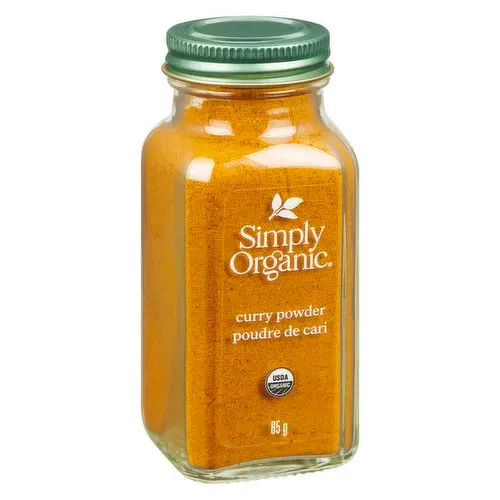
- USDA-certified organic.
- Sourcing documentation published per SKU.
- Standard grocery-channel availability.
CanSpice Organic (Calgary)
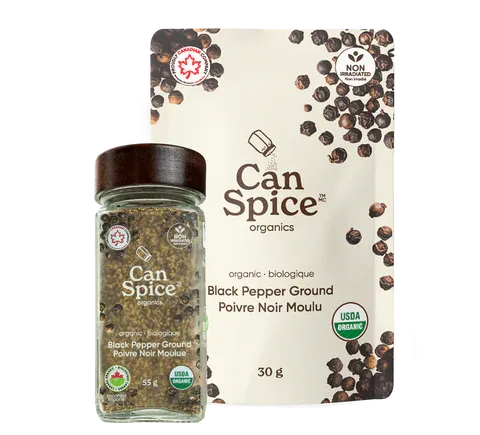
- Calgary-based operation.
- Canadian-sourced ingredients where climate permits; imported supplements documented per blend.
Salaaz hasn't audited either brand's full supplier chain; published certifications and supplier documentation are the source.
What follows
Reading the country-of-origin line on a spice jar carries information the front-of-pack marketing does not. Country-named saffron, vanilla, and chili are the minimum signal. Fair-trade-certified spice is the higher one — though the certification's smallholder coverage in some producing regions is partial.
For adjacent reading, see our piece on coffee's parallel supply-chain economics, our look at rice cultivation labour, and our piece on Xinjiang cotton in the apparel supply chain.