
Polyester is petroleum spun into fibre. The starting feedstock is the same crude oil used at the gas pump; the chemistry between feedstock and finished t-shirt adds dyes, finishes, and softeners. Textile Exchange's industry data puts polyester at roughly 80% of all synthetic fibre output and approximately half of total global fibre — a dominance that is almost entirely a function of unit cost. Fast fashion exists because polyester exists.
What the material does, on the body and in the water
A 2021 Environmental Chemistry Letters review documented that polyester clothing carries both microplastic shedding and synthetic dye residue with documented health correlations — the dye chemistry routinely includes formaldehyde, aromatic amines, and heavy metals at trace levels. A Concordia University researcher's 2024 work linked long-term wear of synthetic-dye clothing to elevated incidence of autoimmune disease, asthma, and skin sensitisation.
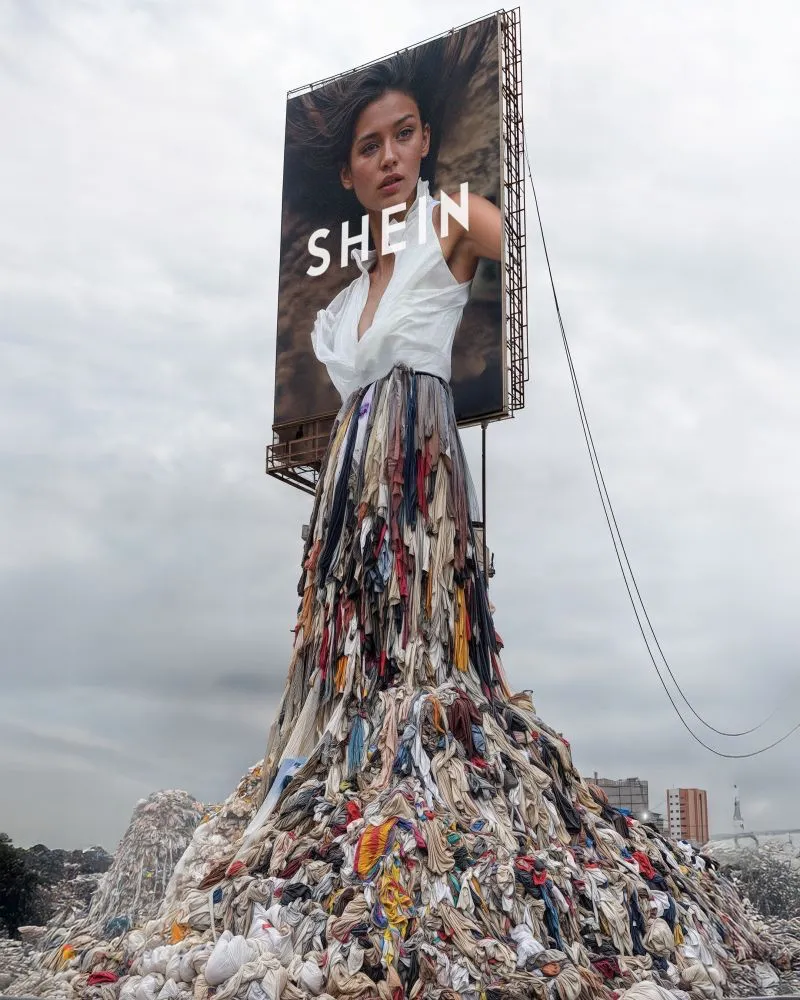
The environmental tail is large at both ends of the lifecycle:
- Extraction. Polyester begins with fossil-fuel extraction; its per-garment carbon footprint runs measurably above natural-fibre equivalents.
- Use phase. Common Objective estimates synthetic textiles account for 35–50% of microplastic emission to the ocean, shed during laundry cycles.
- End of life. Polyester is functionally non-biodegradable; the David Suzuki Foundation reports that 87% of textiles globally are landfilled or incinerated.
The shift to natural fibres — cotton, wool, linen, hemp — solves part of this. Not all of it.
The cotton side of the problem — Xinjiang
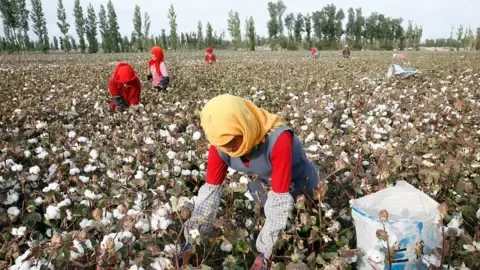
Cotton replaces polyester's petroleum problem but inherits a separate one. Xinjiang produces over 20% of the world's cotton and is at the centre of well-documented coercive-labour programmes. A 2024 SSRN paper documented forced-labour transfers tied to the regional cotton harvest; The Guardian reported in 2020 that over half a million members of ethnic minority groups were transferred into cotton-picking work under state programmes. Multiple human-rights bodies — the UN OHCHR among them — have characterised the broader pattern as crimes against humanity directed at the Uyghur and other Turkic Muslim populations.
The brand-side implication: cotton sourcing transparency at the region level is the minimum signal. "Cotton, made in China" is not enough. "Cotton, sourced in Egypt" or "cotton, GOTS-certified India" carries information the first claim does not.
Two certifications that mean something
Global Organic Textile Standard (GOTS) Certified
- Minimum 70% certified organic natural fibre content.
- Bans of named hazardous inputs (chlorine bleach, formaldehyde, aromatic solvents).
- Third-party audit on labour conditions per ILO standards.
Fair Trade Certified
- Auditied price premiums paid directly to producer cooperatives.
- Worker-condition standards covering working hours, freedom of association, no-child-labour verification.
- Climate-impact reporting on listed suppliers.
Salaaz hasn't audited either certifier's full registry; the certifications cover the labelled product, not necessarily everything else the brand makes. Reading the label is still the start of the work.
For adjacent reading, see our piece on synthetic-fibre creep into knitwear and crochet, our look at the spandex recycling problem, and our piece on labour conditions in the fast-fashion supply chain.