
Polyester is the obvious target. Spandex — also marketed as elastane or Lycra — is the quieter one. A 2% spandex strip in a cotton t-shirt, a 5% blend in jeans, a 12% blend in a yoga top: the additive is so common that the apparel-industry estimate is spandex appears in roughly 80% of garments now leaving factories. The structural problem isn't the percentage. It's what the percentage does to everything around it.
Why a 5% blend ruins the other 95%
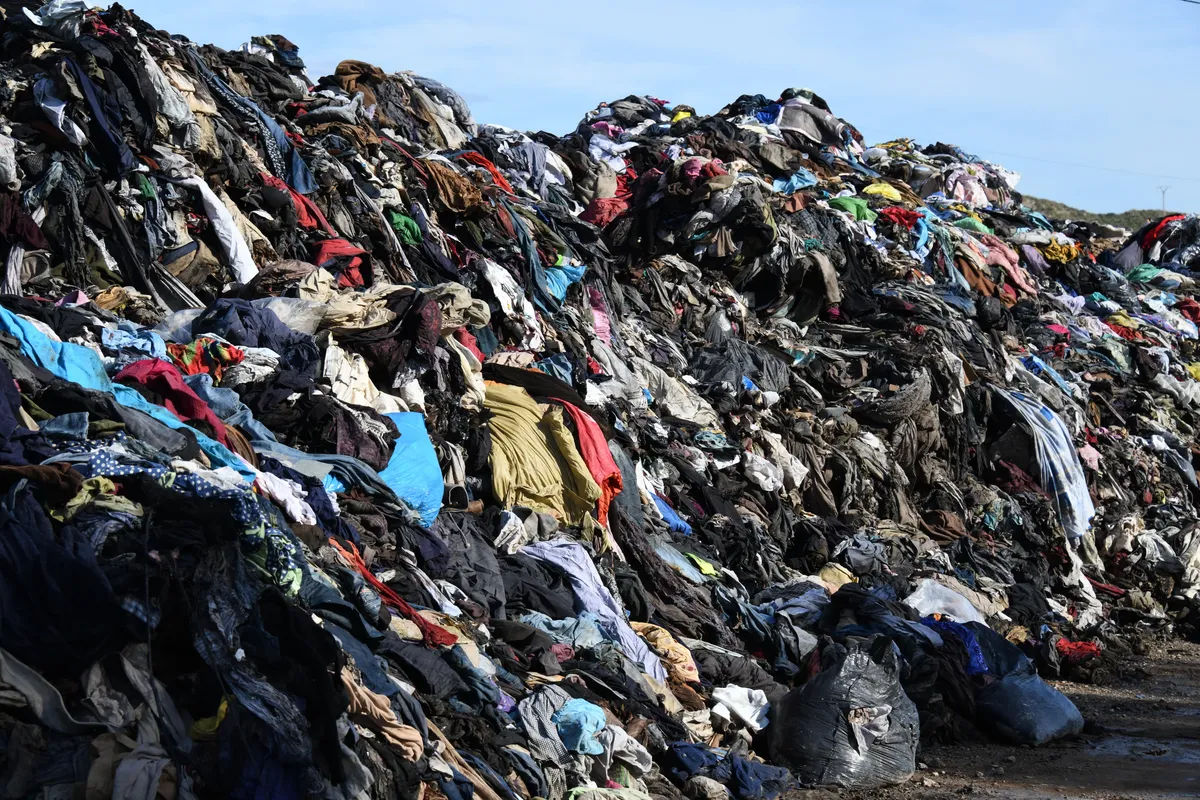
Textile recycling lines are calibrated to a single dominant fibre. Mechanical or chemical recycling of cotton needs cotton-only input; the same for wool, polyester, polyamide. Spandex's elastomer chemistry contaminates recycling lines and is generally rejected at concentrations as low as 5%. A garment that's 95% cotton and 5% spandex is, in recycling-line terms, ungraded — it goes to the landfill stream along with the 5%.
The financial logic of the dye-house and the recycler runs in opposite directions. The first wants stretch; the second wants single-fibre purity. The compromise the consumer sees is a hangtag listing the blend; the compromise the planet sees is the share of textile output that recycling can't touch.
The chemistry
Spandex shares polyester's petroleum-origin profile. The polymerisation chemistry adds a different load — isocyanate precursors, formaldehyde residue, azo-dye system carriers. One Green Planet's review of the elastane production literature summarises documented animal-model toxicity findings — kidney, liver, brain, and bone-marrow effects at sustained exposure — alongside the formaldehyde and aromatic-amine concerns that mirror the broader synthetic-textile dye-system pattern.
The use-pattern matters too. Spandex is in workout wear, lingerie, hosiery, swimwear — categories worn against the skin for long stretches under heat and sweat conditions that increase dermal absorption.
The natural alternative
RawGanique is one of a small number of brands committing to a fully plastic-free fibre stack. Their published spec:

- 100% biodegradable fibre composition.
- Fibre-reactive low-impact dyes (not the azo/aromatic-amine class).
- Natural cork labels, organic cotton thread, tagua nut and coconut buttons.
- Natural-rubber elastic where elasticity is needed (waistbands, cuffs).
Salaaz hasn't audited the manufacturing chain; the brand's published disclosures are the source. Price runs higher than the spandex-blended equivalent — the comparison isn't on cost, it's on what's in the garment and what happens to it when it leaves.
The other lever — owning fewer things
A spandex-free wardrobe still ends up in the landfill if it's bought at scale. The structural answer to fast-fashion volume isn't a different blend; it's fewer pieces.

A 2020 VeryWellMind synthesis of the cluttered-environment literature documents associations between physical clutter and elevated anxiety, sleep disruption, and dampened mood. The argument cuts both ways: a smaller wardrobe isn't a sacrifice, it's a different kind of fit.
For adjacent reading, see our piece on the broader synthetic-textile economy, our look at synthetic fibres in mass-produced knit and crochet, and our piece on labour conditions in fast fashion.