
A Pakistani rice harvester named in a 2019 Oxfam field profile, Shamsad Bibi of Muridke, starts paddy work at 8am after household labour begun at 6. Standing water, sustained heat, and minimal protective equipment produce the documented chronic-health profile that runs across the rice-farming workforce. Her day's earnings sit well below regional poverty thresholds.
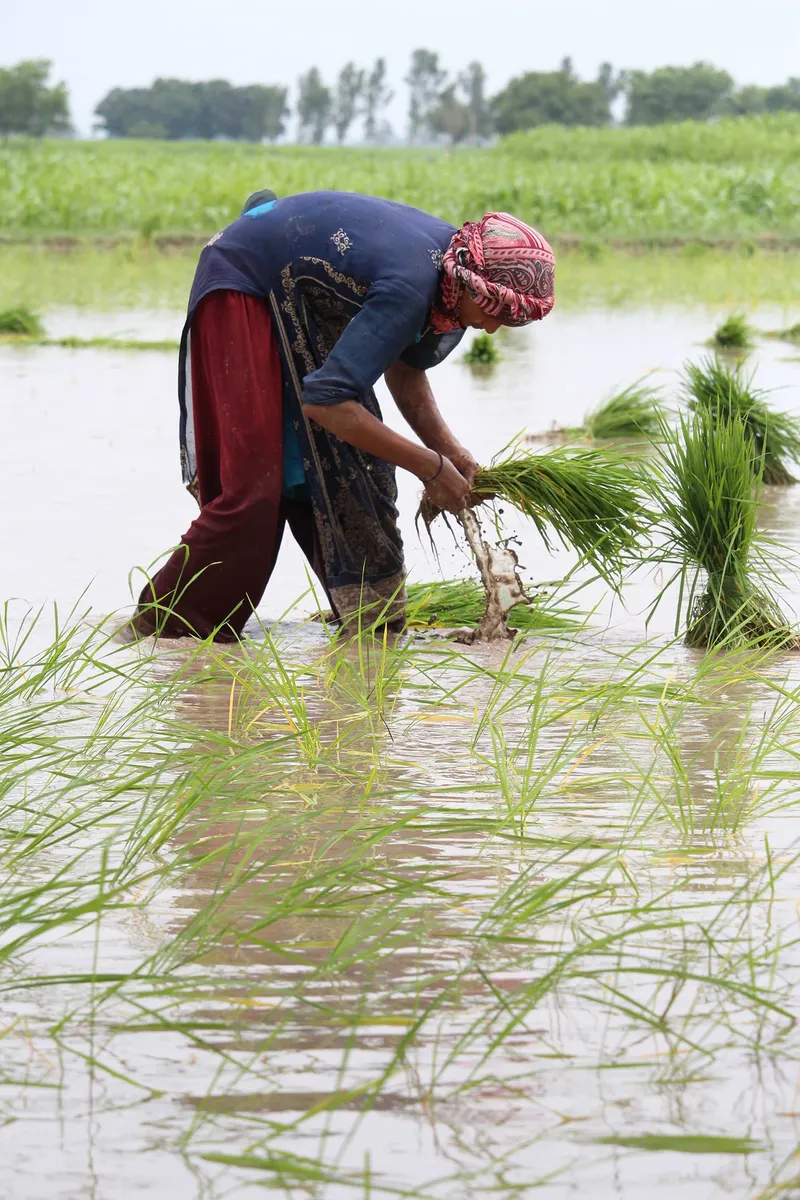
Shamsad's case isn't an outlier. Women provide the majority of paddy labour in Indonesia, the Philippines, and across South Asia. An Oxfam supply-chain study found approximately 80% of Pakistani women rice workers experience documented food insecurity — labour that produces the calorie supply for others, while not securing its own.
The supply-chain economics
The Oxfam study quantified the upstream value capture: rice farmers receive roughly 4% of the retail price consumers pay at the destination. The other 96% routes through middlemen, processors, exporters, importers, and retailers.
The environmental tail is comparably large:
- CTV News reported on India's rice-export dominance and the associated groundwater depletion in the Indian, Vietnamese, and Pakistani production geographies.
- The UN Environment Programme estimates paddy rice cultivation requires approximately 1,000 gallons of water per kilogram of finished grain — a small bag of rice represents the safe drinking water allotment of one person for multiple years.
- Agriculture Canada's emissions accounting attributes approximately 10% of global agricultural methane and 43% of global irrigation water use to rice production.
The glycemic side
White rice is processed grain. The bran and germ are removed during milling, taking the fibre with them. A 2020 Nutrients review documented carbohydrate-to-fibre ratios in modern milled rice ranging from 65:1 to 400:1, producing rapid blood-glucose elevation and reactive insulin response. The sustained-intake correlation with type-2 diabetes, obesity, PCOS, and metabolic dysfunction is well-established.
Two substitutions worth knowing about
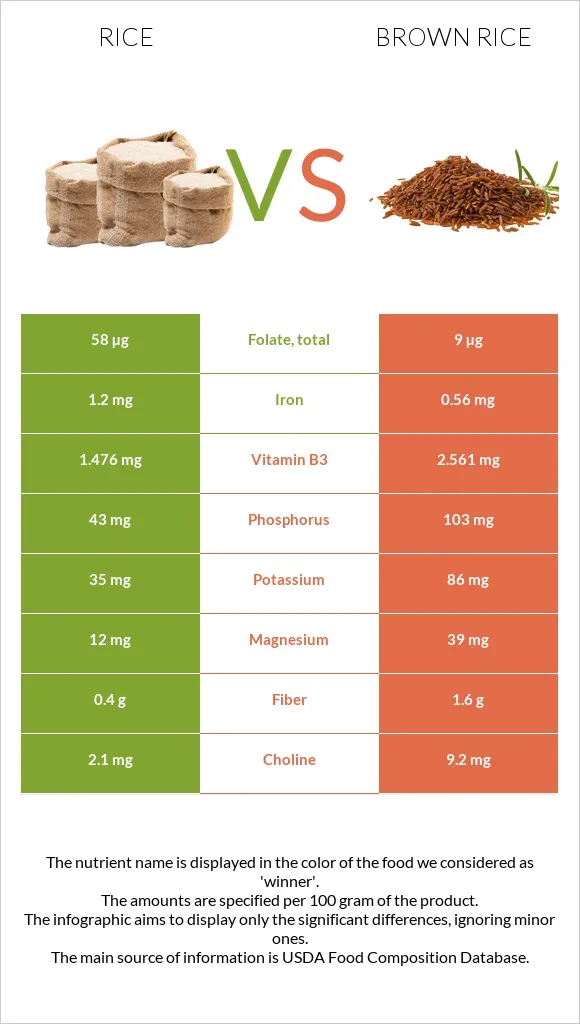
Brown rice retains the bran and germ — and approximately 2× the fibre of white rice at comparable caloric density.
Millet is functionally substitutable for rice as a side grain, with documented profile advantages:
- Higher fibre content with slower glucose release than white rice.
- Lower water requirement at cultivation (~30% less than paddy rice).
- Gluten-free, which matters for the relevant dietary population.
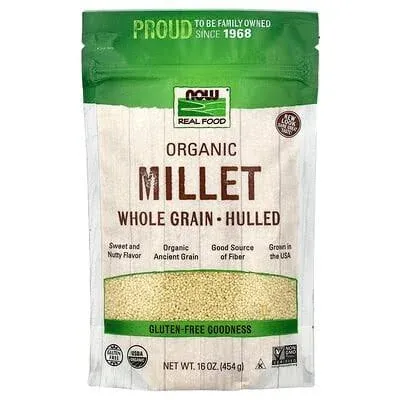
- Now Foods Organic Certified Millet is one of several widely-available retail products at comparable price-per-serving to white rice.
Salaaz hasn't independently audited Now Foods' supply chain; the published certifications are the source.
What follows
Rice isn't categorically a problem. The combination of farm-gate compensation, water intensity, and post-milling glycemic load makes it a more layered choice than the price tag implies. The substitutions are real — brown rice for fibre, millet for variety and water efficiency — and don't require a kitchen overhaul.
For adjacent reading, see our piece on coffee's parallel farm-gate compensation problem, our look at spice supply chains and the exploitation history, and our piece on water inequity and bottled-water markets.