
Ramadan structures a month around fasting, charity (zakat and sadaqah), and reflection. The charity emphasis sits inside a global wealth-distribution context that makes the math of individual giving look very different from the math of structural reform.
What the wealth distribution actually looks like
Oxfam's standing reference puts the top 12 billionaires holding more wealth than the poorest half of humanity combined — approximately 4 billion people. The figure isn't a rhetorical flourish; it's a calculation across the Forbes Real-Time Billionaires list against the Credit Suisse Global Wealth Report.
The Canadian-specific picture isn't substantially different in trend direction. Policy Options' 2024 review documents the top 20% of Canadian households holding approximately 65–68% of national net worth, with the bottom 40% holding approximately 3% — a wealth-concentration ratio that has tightened over the past decade.
Charity and its limits
A 2021 The Conversation piece aggregated the Indiana University Lilly Family School of Philanthropy survey data showing US Muslims giving above the national average in charitable contribution per-household. The pattern is consistent across multiple measurement cycles.
The arithmetic limit, though: the cumulative charitable contribution from any community-scale donor pool can be matched in net financial impact by a small number of high-net-worth-individual decisions. The structural-inequality question doesn't yield to individual generosity at scale. Both can be true — individual charity is meaningful, and individual charity isn't sufficient.
Where the inequality hits hardest
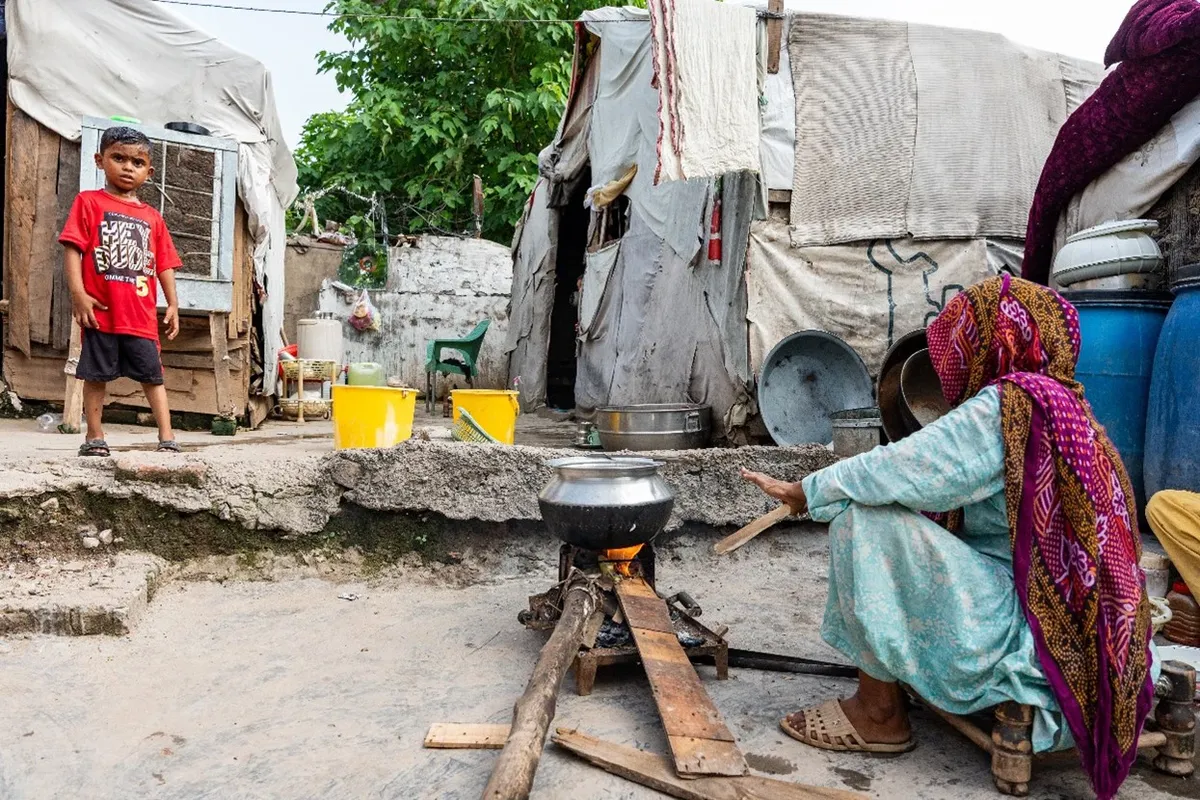
Pakistan-specific data: Arab News reported in 2025 on the World Bank's updated poverty threshold putting Pakistan's poverty rate at approximately 45% of population. The within-country distribution: roughly 60% of national wealth held by the top decile, under 20% by the bottom half. The geographic juxtaposition is sharp — gated affluent developments operating within kilometres of households without secure water access.
The Pakistani case isn't unique; it's representative of post-colonial economies where extractive capital concentration runs in tension with broad-based development.
The Ramadan-dates choice
The Israeli-export date supply chain operates partly on cultivation sites located on territory the Israeli occupation maintains under contested-legal-status conditions. Common Israeli date brands to be aware of (per published boycott documentation):
- Star Dates
- King Solomon Dates
- Delilah
- Galil
- Urban Platter
A documented alternative with Palestinian sourcing chain:
Palm Bites (Mississauga, ON)

- 100% Palestinian-sourced dates.
- Operates with Palestinian workers, farms, and brokers in the supply chain.
- Chocolate-and-date confection range; full dessert selection.
- Located in Ridgeway Plaza, Mississauga.
Salaaz hasn't independently audited Palm Bites' supplier chain; the published sourcing claims are the source.
What follows
Ramadan as a structure encourages individual reflection on consumption, charity, and the people who don't have what we have. The reflection lands differently when the math of structural inequality is in the foreground. Individual practice and structural advocacy aren't substitutes for each other; they operate on different time horizons.
For adjacent reading, see our piece on global water inequality and bottled-water markets, our look at the broader food supply chain ethics, and our piece on Eid as call-to-action.