
When economic interest meets indigenous land rights, the documented Canadian pattern across federal and provincial decisions has been for economic interest to prevail. Three current-period cases illustrate the pattern.
Three documented cases
Coastal GasLink pipeline (British Columbia).
The Public Safety Canada parliamentary briefing documents the Coastal GasLink pipeline's traversal of Wet'suwet'en territory and the opposition by Wet'suwet'en hereditary chiefs — the governance body that, under Wet'suwet'en law, holds authority over traditional territory. The Canadian Crown has consistently treated the elected band-council consent as legally sufficient; the hereditary chiefs argue this is a misapplication of the Crown's own jurisprudence (per Delgamuukw, Tsilhqot'in Nation, and subsequent Supreme Court of Canada decisions).
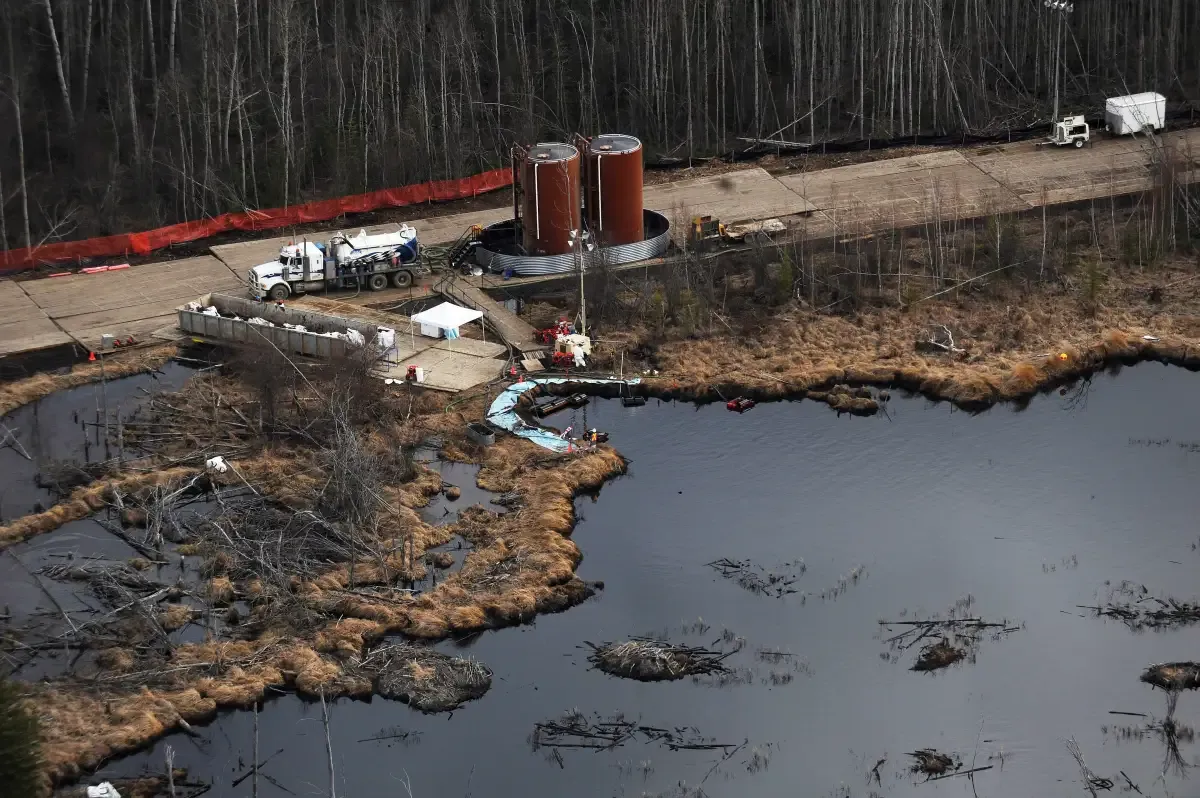
Alberta oil sands (downstream Indigenous health).
A 2009 Environmental Health Perspectives paper documented elevated cancer, respiratory, and neurological disease incidence in Indigenous communities downstream of Alberta oil sands operations along the Peace and Athabasca river systems. The land-and-water relationship at the centre of the affected communities' way of life is the variable through which the health outcomes route.
Manitoba Hydro displacement.
A CanLII commentary documents Manitoba Hydro's flood-and-displacement pattern affecting multiple Indigenous communities across the Churchill River and Northern Manitoba regions; the legal proceedings on damages have run for decades without complete settlement.
From colonialism to consumerism — the inheritance chain
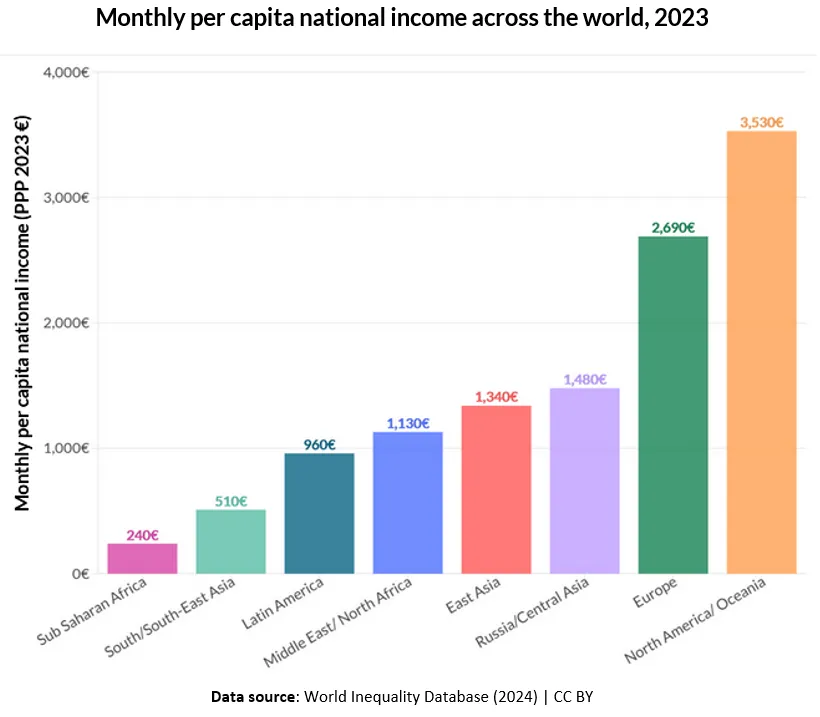
The land-rights pattern in Canada isn't a uniquely Canadian story. It's one node in a longer pattern. The development-economics correlations:
- Formerly colonised regions — across Africa, South Asia, Southeast Asia, and Latin America — track strongly with the "developing economy" category in current World Bank classification.
- Former colonisers and settler colonies — UK, France, Spain, Portugal, the Netherlands, Belgium, Canada, the US, Australia, New Zealand — track strongly with the "developed economy" category.
The correlation isn't perfect, but it's substantial enough to surface in nearly every cross-national development-economics dataset.
Four mechanisms by which the inheritance still operates in consumer markets
- Resource extraction. Raw materials sourced from former-colony geographies at depressed prices feed manufacturing in former-coloniser jurisdictions. The cobalt-from-Congo, palm-oil-from-Indonesia, and Xinjiang-cotton patterns covered elsewhere in our editorial are the contemporary form.
- Labour-cost arbitrage. Manufacturing routed to jurisdictions with weak labour-protection regimes — the fast-fashion pattern, the electronics assembly pattern.
- Externalised waste. High-consumption jurisdictions export plastic waste and electronic waste to lower-regulation receiving regions (covered in our microplastics piece).
- Cultural-economic flattening. Global-brand homogenisation reduces market share for regional and indigenous-owned operations.
The Salaaz position

The platform's editorial position runs against the consolidation-and-extraction pattern. Concretely:
- Vendor-vetting against documented ethical criteria, including land-rights and labour-condition flags.
- No paid-placement ranking.
- Support for smaller operators with disclosed supply-chain documentation rather than large brand portfolios.
Three structural benefits of supporting smaller, locally-owned operators:
- Money stays in the local economy — direct community-level reinvestment.
- Smaller operators are more often willing to publish operational disclosures multinational competitors won't.
- Cultural and operational diversity in the supply chain reduces single-source-failure risk.
For adjacent reading, see our piece on the Kimberley Process and conflict-minerals certification gaps, our look at electronic-waste supply chains and cobalt extraction, and our piece on Xinjiang cotton in the textile supply chain.