
The certification, and what it doesn't certify
The Kimberley Process Certification Scheme was set up in 2003 to keep "conflict diamonds" out of the legitimate trade. The phrase has a specific definition: per the U.S. State Department's reference text, conflict diamonds are "rough diamonds used by rebel movements or their allies to finance conflict aimed at undermining legitimate governments."
The framing matters. Fifty member states agreed a certification covering one specific harm — diamonds funding rebel groups against recognised governments — in the wake of West African civil wars that Amnesty International estimates cost roughly 4 million lives. Everything outside that frame falls out of scope.
The scheme does not cover diamonds linked to:
- Human-rights violations carried out by legitimate governments or by state security forces — only those by rebel movements.
- Forced displacement of communities for mine access. In Zimbabwe, diamond mining displaced about 1,200 families to clear room for a Chinese mining operation; Human Rights Watch has documented forced labour and security-force violence at the same site.
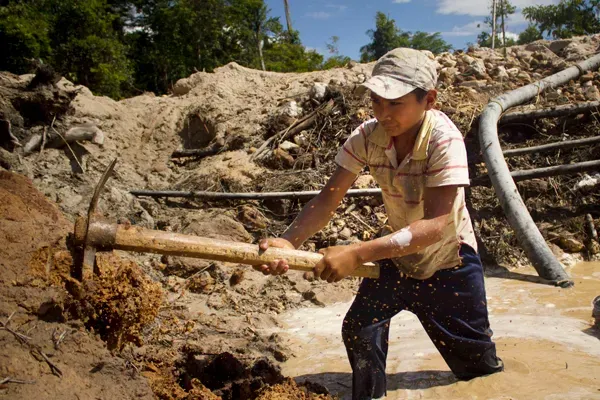
- Child labour and trafficking, which a Harvard Human Rights Clinic report found documented in multiple production countries.
- Mining on unconsented indigenous land. Canadian companies have been accused of silencing indigenous protest at sites outside Canada. A 2020 Supreme Court of Canada decision permitted Eritrean conscripts to sue a Canadian-domiciled mining company in Canadian courts for treatment at its Eritrean site — the case argued conditions amounted to forced labour.
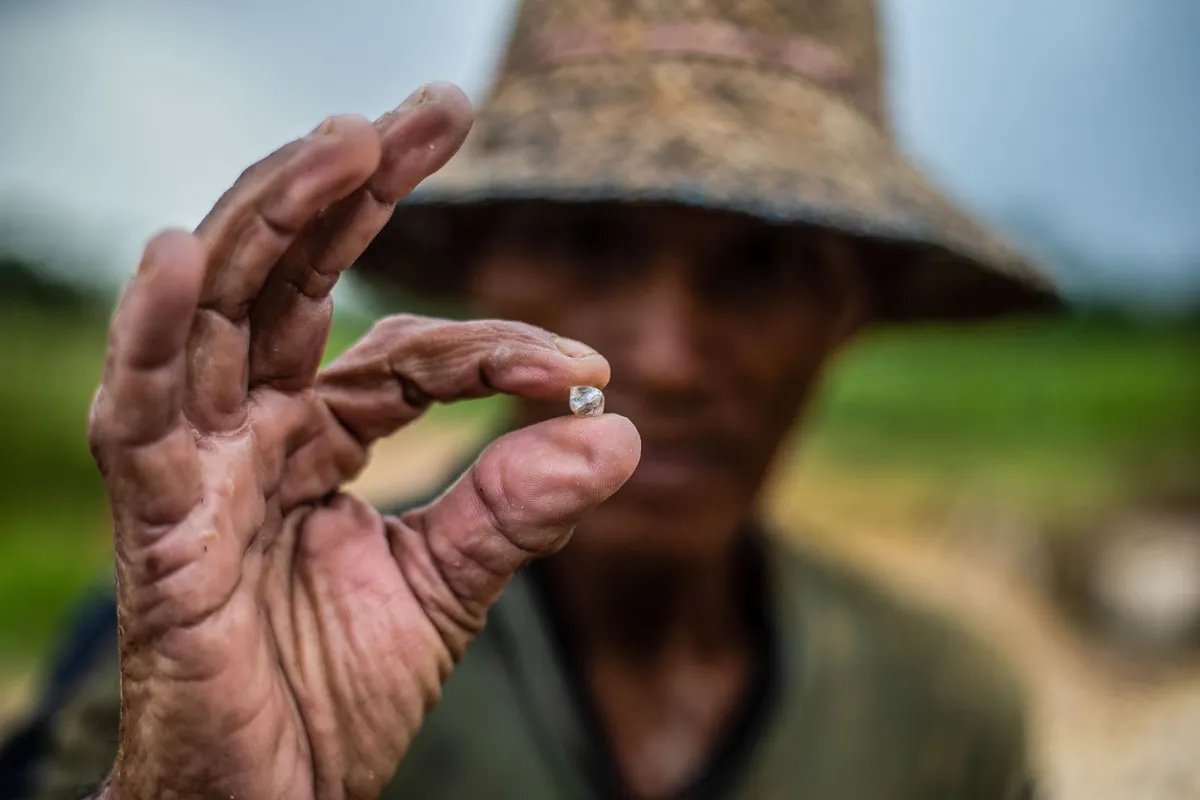
A certification is only as strong as the harm it names. The Kimberley Process names one harm; the international diamond trade carries others.
State actors and the scheme's blind spot
A consequence of restricting the definition to non-state armed groups is that diamonds funding state-level violence pass through certified. Reporting by Watan on the UAE-Israel diamond corridor estimates the Israeli polishing industry earns roughly $1 billion annually, with profits the reporting links to the state's military spending. Israel chaired the Kimberley Process scheme in 2010. The certification continues to mark these diamonds as conflict-free under its own definition.
A certification willing to name the harm in full would have to expand its remit to all human-rights violations attached to a stone's origin, not only those committed by parties the certifier already doesn't recognise. That is the structural gap.
What full provenance looks like
A small number of programmes track diamonds from extraction to retail. The CanadaMark scheme — administered by the Canadian government for stones mined at the Ekati and Diavik operations in the Northwest Territories — is one of them.
CanadaMark, against the same criteria

- Chain of custody. Each stone is traced from mine to polished gem under audited processes; the certification revokes if the chain breaks.
- Origin named. Extraction at the Ekati and Diavik mines, Northwest Territories.
- Stone class. Natural, untreated diamonds meeting a published minimum grade.
- Operational disclosures. Compliance with Canadian environmental and labour regulation, including Indigenous hiring programmes at the mine sites, wildlife monitoring, and water recycling.
Retailers currently selling CanadaMark-certified stones include Avalon Fine Jewelry, St Onge Jeweller, and Taylor & Hart. Salaaz hasn't audited those retailers' broader catalogues; the certification covers the stones, not the storefront.
For broader context on the politics of mineral extraction, see our piece on weapons industries and conflict economics and our reporting on indigenous land rights and resource extraction. A ring is a small object. The thing it stands in for is not.