
Misinformation isn't a property of disreputable channels alone. Three documented cases — one through a major US cable network, one through a major Russian state broadcaster, one through a major US pharmaceutical company — sit on the public record. The classification "fake news" tends to land on social media gossip; the institutional pattern is more useful to look at.
Three institutional cases
Fox News, 2017 — the Swedish security advisor.
CBC News documented Bill O'Reilly's February 2017 interview with a man presented as a "Swedish national security advisor" discussing claims about Sweden's immigrant-related crime statistics. Subsequent reporting confirmed the interviewee held no government security position and had a prior criminal record. The claims aired by Fox News were used as input by President Trump in subsequent public statements; the credential failure happened upstream of the political amplification.
Russian state TV, 2017 — the alleged Stockholm riot staging.

The Independent reported on an alleged 2017 incident in which a Russian TV crew offered Rinkeby (Stockholm) residents approximately 400 Swedish krona each to stage a riot for filming; the attempt was caught by a Danish Broadcasting Corporation reporter who happened to be observing the location. The footage that would have resulted would have fed back into the same narrative ecosystem the Fox News case ran through.
Purdue Pharma, 1996–2007 — the OxyContin "<1% addiction" claim.
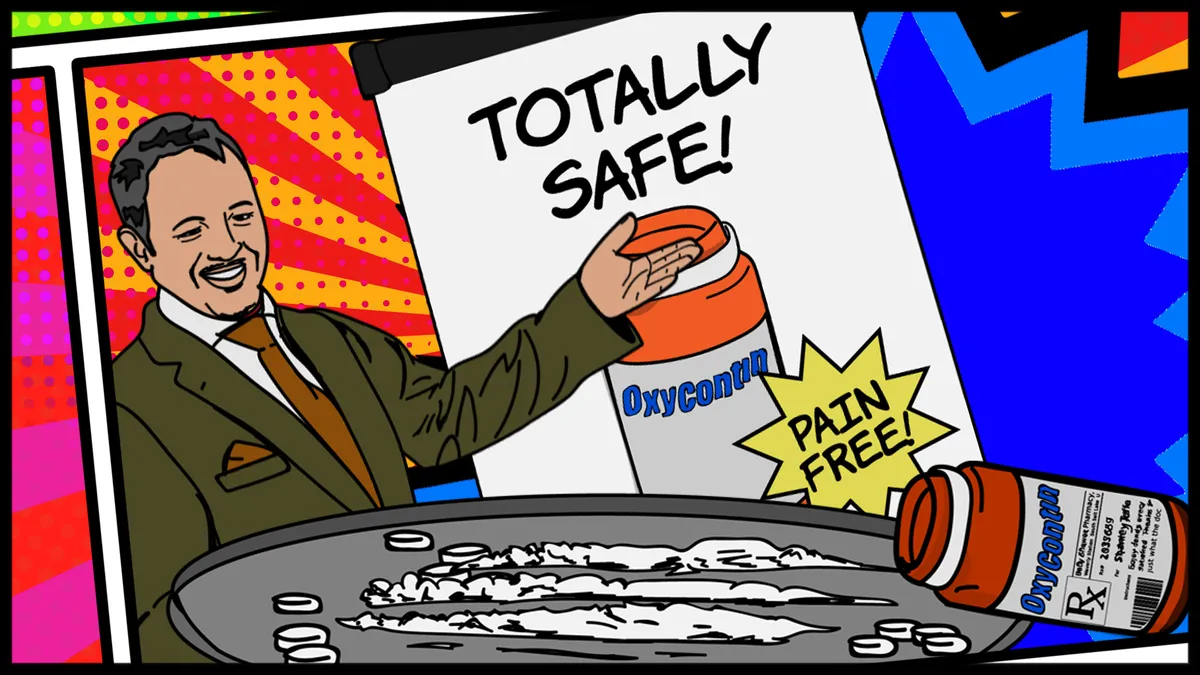
The most damaging documented case isn't political: a 2008 Journal of Public Health Policy analysis documented Purdue Pharma's sales representatives instructing doctors that OxyContin carried less than 1% addiction risk — a figure with no controlled-trial support that the company's own internal documents later revealed to be substantially understated. The downstream cost is a documented opioid epidemic across the US and Canada with measurable mortality and chronic-pain-mismanagement impact across multiple decades.
A practical framework
Three operational practices that move the variable:
- Lateral reading. Rather than evaluating an article's claim depth, check whether multiple independent sources cover the same story with consistent details. Single-source claims are the warning signal regardless of channel reputation.
- Fact-check resources. Snopes, FactCheck.org, PolitiFact, the Poynter International Fact-Checking Network for international claims, and CBC's The National-affiliated fact-check segment for Canadian claims.
- Emotional-temperature check. Strong emotional framing — outrage, fear, urgency — is the marketing signal that the claim is engineered for amplification rather than for accuracy. Slow down on the strong-emotion claims specifically.
What follows
The cost of misinformation is real and measurable — opioid-mortality figures, public-health-policy distortions, immigration-policy positions built on fabricated incident reports. The defence isn't sophisticated; it's the discipline of cross-checking before sharing.
A specific Canadian case worth flagging on terminology: the conflation of antisemitism and anti-Zionism — distinct political and ethical concepts — has become a common rhetorical move in current Canadian discourse. Distinguishing them carefully is the practice the broader information-ethics framework asks for.
For adjacent reading, see our piece on label engineering and marketing framing, our look at greenwashing-specific penalties, and our piece on Google's ad-based information surface.