

The dietary-supplement industry sells against the gap left by the regulatory framework: in the US, supplements are governed by the 1994 DSHEA, which permits sale without pre-market efficacy review and limits FDA action to post-market enforcement of adulteration or misbranding. The Canadian Natural Health Products Regulation is somewhat tighter but still substantially weaker than the prescription-drug regime. The market dynamic that follows is documented and consistent.
Four documented risk patterns
- Adulteration with prescription drugs. A Global News investigation documented Health Canada removing 200 sexual-enhancement products found to be adulterated with sildenafil or tadalafil. The same pattern recurs in weight-loss and muscle-building supplement classes. The Dietary Supplement Quality Collaborative briefing documents the broader pattern.
- Proprietary blends. A 2023 Frontiers in Nutrition paper detailed the proprietary-blend disclosure loophole: manufacturers list a blend's total mass on the label without disclosing per-ingredient quantities, which permits "fairy dusting" — including a documented ingredient at a sub-therapeutic dose while presenting the label as a high-dose product.
- Dosage and contaminant load. The NIH Office of Dietary Supplements maintains an overview of common adverse-event patterns covering hepatic, renal, and neurological effects from sustained over-dosing or contaminant exposure.
- Source-quality variance. A 2014 Journal of the American Society of Nephrology paper documented high contaminant variance in ashwagandha, turmeric, and protein-powder sourcing, including heavy-metal residue at concentrations exceeding food-safety thresholds in lower-tier products.
Truth in Advertising's 2016 audit found approximately 97% of MLM-distributed supplement marketing claims breached the FTC standard for substantiated health claims. The pattern hasn't substantially improved in the years since.
Three specific supplement-vs-whole-food cases
Omega-3 fish oil. The 2019 NEJM VITAL trial found omega-3 supplements did not significantly reduce cardiovascular events in the trial cohort; whole-fish dietary intake remains differentiable from the supplement form in observational studies. The supplement isn't a replacement.
Kava. Used for anxiety; NIH ODS documents hepatotoxicity at sustained intake, with several documented liver-failure case reports linked to supplement-level exposure.
Calcium. NIH ODS documents the upper safe-intake threshold at 2,500mg/day for adults 19–50 and 2,000mg for adults 51+; above-threshold supplementation has been associated with vascular calcification and elevated cardiovascular risk in some cohorts. Dietary calcium from food sources doesn't carry the same dose-stacking risk profile.
Two operators with audited disclosure
CanPrev (Canada)
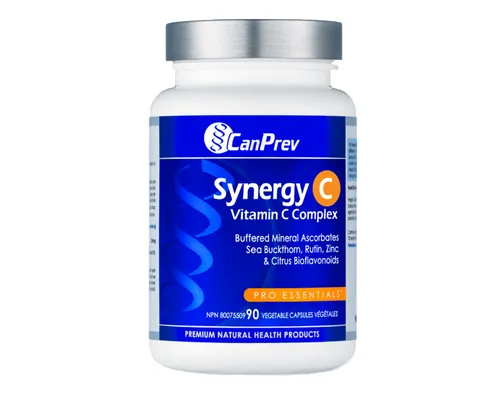
- Canadian-manufactured operation.
- Per-ingredient quantity disclosed on label (no proprietary blends).
- Canadian-supplier sourcing for ingredient stack.
- Vegan formulations across major SKUs.
- No artificial colours or common allergens.
Ritual (US)

- Traceable per-ingredient sourcing published.
- Full per-ingredient quantity disclosure.
- Vetted vendor evaluation against human-rights and environmental flags.
Where to buy
Healthy Planet (GTA, Canada)

- 39 retail locations across the GTA.
- Broader vetted-supplement range than mainstream pharmacy chains.
- Healthy Planet Kitchen quick-service line at adjacent locations.
Salaaz hasn't independently audited any of the brands or retailers above; their published certifications and disclosures are the source.
What follows
The structural answer to supplement-industry opacity is regulatory — pre-market efficacy review, proprietary-blend disclosure mandate, mandatory third-party contaminant testing. None of these is the current regulatory direction. The consumer-side answer is conservative: whole foods deliver the relevant nutrient panel without the supplement-class risk profile; supplementation makes sense for documented deficiency states, not as a default daily intake.
For adjacent reading, see our piece on cosmetic-regulation gaps, our look at restriction-diet marketing, and our piece on the Mediterranean dietary pattern as the evidence-backed alternative.