
The structure of charitable giving in North America hides a meaningful gap between the donor's intent and the recipient's outcome. The gap operates through documented overhead-allocation patterns and through the mechanics of high-net-worth philanthropic structures.
The overhead question
Three documented cases at large operators:
- American Red Cross — Haiti Relief Fund (2010). A 2016 Senate investigation surfaced approximately $125M of the Haiti relief funds spent on overhead and administration — roughly 25% of the total raised. The investigation produced systemic-level findings on the organisation's financial controls.
- Wounded Warrior Project. A 2016 CBS News investigation documented approximately 40% of donations spent on conferences, executive perks, and administrative costs rather than the veteran-support programmes the marketing emphasised. The board fired the CEO and chairman as the reporting surfaced.
- The "worst 50" registry. SmartAsset's aggregation of 50 charities raising $1B+ collectively with under 12% reaching beneficiaries — the registry isn't comprehensive but maps the documented worst-case operators.
The red flag isn't high administrative cost per se — established charities require operating infrastructure — it's an organisation that won't disclose the per-dollar allocation publicly when asked.
The billionaire-philanthropy mechanics
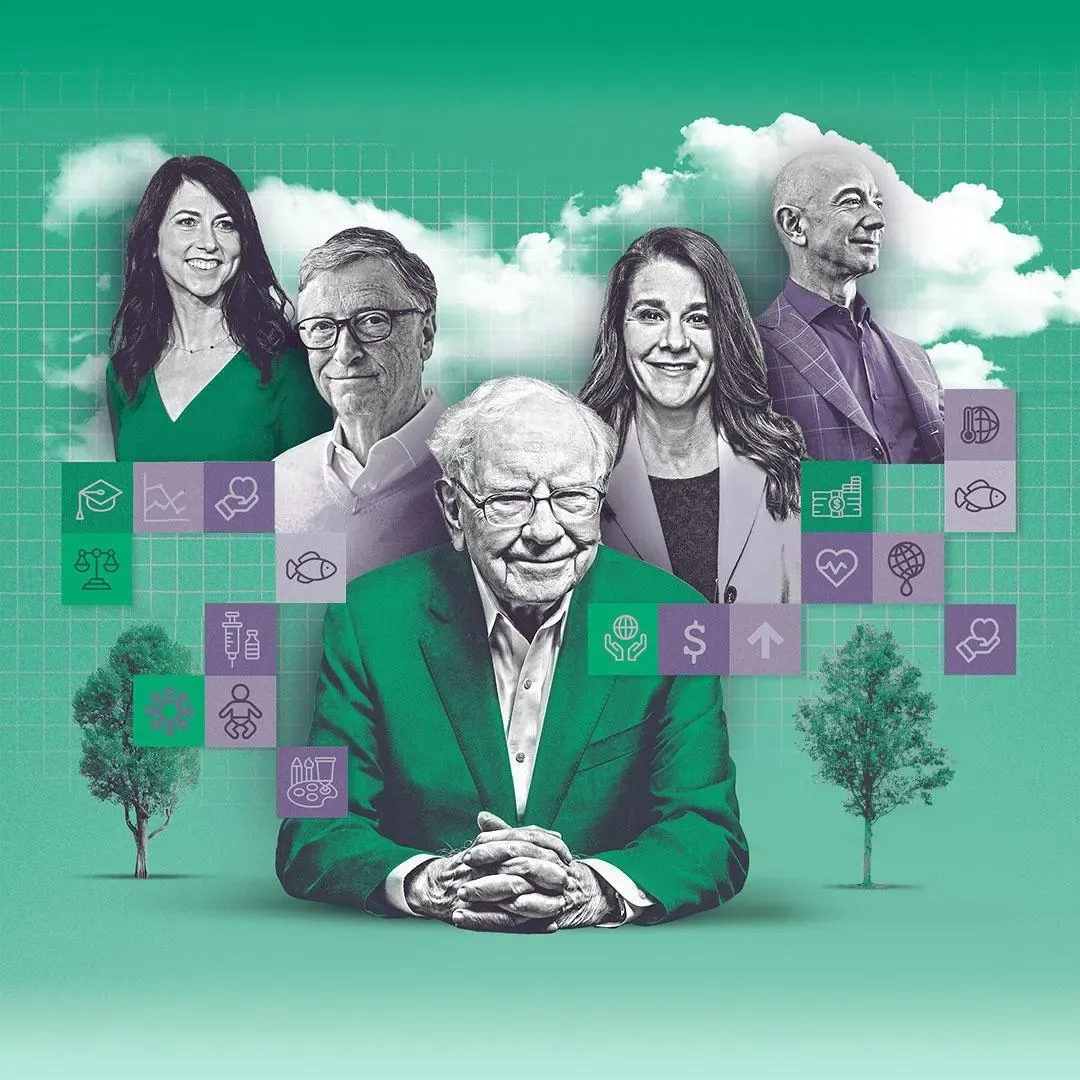
Three structural patterns documented across the high-net-worth philanthropic landscape:
- Tax deduction at the highest marginal rate. A donor at the top US marginal rate paying 37% federal can route $1 to a controlled foundation and reduce federal tax liability by approximately $0.37. The foundation then deploys the donation across the donor's preferred causes, often with the donor retaining significant control.
- Donor-Advised Funds (DAFs). A donor receives the tax deduction at contribution time but retains discretion over deployment, sometimes for decades. The funds sit in investment vehicles generating returns to the sponsoring organisation while the donor's intent remains undefined.
- Cause-portfolio alignment. A 2021 Republik investigation documented the Bill & Melinda Gates Foundation's pharmaceutical investment portfolio overlap with the foundation's grant-making categories — the same companies the foundation funds health-intervention partnerships with are companies the foundation holds equity in. The structural question is whether the philanthropy operates separately from the investment activity.
- Press-release vs operational deployment. Jeff Bezos' announced $10B climate-change pledge in 2020 received substantial press coverage; the per-grant disclosure of the funds since has been partial, with significant allocation to large established environmental NGOs rather than to grassroots operators.
Practical donation framework
Four practical positions for ethical giving:
- Direct grassroots routing. Smaller community-led organisations often allocate higher per-dollar fractions to the stated cause — less overhead, less press infrastructure, more direct contact with the recipient population.
- In-kind contribution. Food banks, women's shelters, and refugee-resettlement operators often have specific material need lists that route more efficiently than cash donations.
- Watchdog verification. Charity Navigator, GiveWell, and CharityWatch maintain per-organisation financial-allocation databases. Reading the financial-statement summary takes ten minutes; the data is available because charities are required to file Form 990 publicly.
- Direct questions. Asking an organisation what percentage of donations reach the stated cause is a reasonable request. The response — including a refusal to answer — is information.
For adjacent reading, see our piece on wealth inequality during Ramadan, our look at the Bill Gates / pharmaceutical foundation overlap, and our piece on greenwashing-and-PR-stunt patterns at corporate scale.