

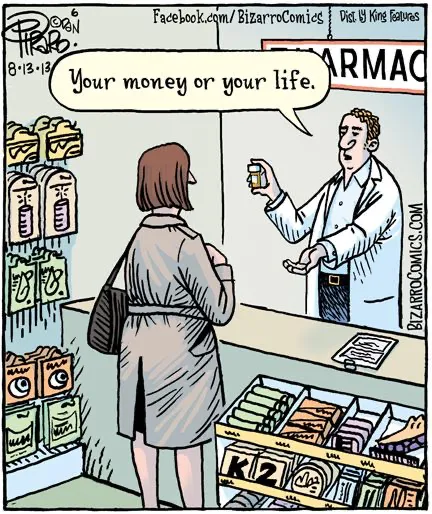
The pharmaceutical industry's pricing and marketing patterns are documented at financial-press depth and through court records. Four specific patterns worth understanding.
Insulin and other price-jacking cases
A vial of insulin costs less than $10 to manufacture; Eli Lilly's US retail price has historically run over $100 per vial, per a 2021 Diabetes Care paper documenting the pricing differential and its mortality consequences. The Lown Institute estimates approximately 1.3 million Americans ration insulin annually due to cost, with documented mortality from rationing-driven dosing skips.
EpiPen pricing followed a similar curve: from approximately $57 retail in 2007 to over $600 by 2017 per CBC News' coverage. The drug delivery system hadn't changed; the corporate strategy had.
Blocking generics — the South Africa HIV/AIDS case
A 2001 Oxfam briefing documented the pharmaceutical industry's lawsuit against the South African government attempting to import affordable generic HIV/AIDS antiretrovirals during the height of the epidemic. The branded treatments cost approximately $10,000 per patient annually; the generic equivalents brought treatment cost under $100 per year. The legal pressure delayed access while the epidemic continued; the eventual settlement was a political defeat for the industry that has shaped subsequent generic-access policy frameworks.
The OxyContin marketing case
A 2024 International Journal of Drug Policy analysis documented Purdue Pharma's OxyContin marketing claims about non-addictiveness as a primary upstream driver of the North American opioid epidemic. The marketing pattern wasn't an accident — internal documents revealed during litigation showed the company had data on addiction rates substantially higher than the figures sales representatives were instructed to present. A 2021 Frontiers in Public Health paper documented the broader pattern of pharmaceutical-industry physician influence across categories.
The lobbying mechanics
A 2009 American Journal of Public Health paper documented pharmaceutical-industry lobbying blocking US Medicare from negotiating drug prices — a structural feature of US drug pricing that doesn't apply in most other developed-economy markets. The Inflation Reduction Act of 2022 partially walked back this block for a small set of drugs; the broader pattern remains.
Integrative medicine — the substitution framework
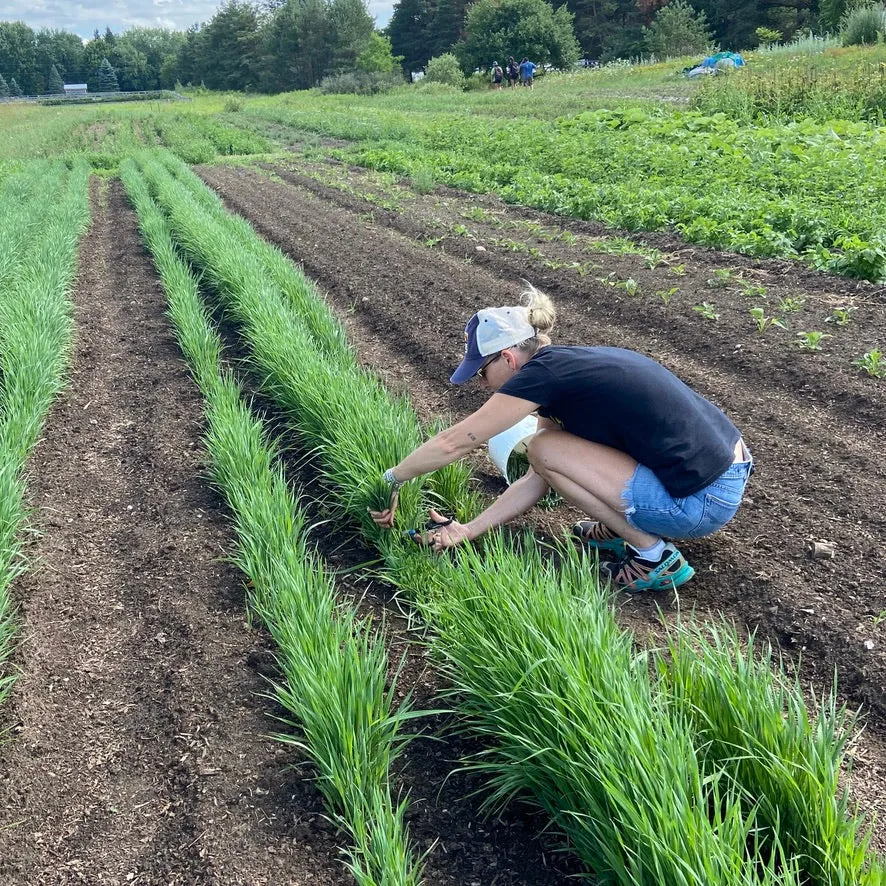
A practical consumer-side adjustment isn't to refuse pharmaceutical care — many conditions require it. The adjustment is the integrative-medicine model: combining medical care for acute and chronic conditions with documented complementary interventions where the evidence base supports them.
Specific examples with research base:
- Honey — documented antitussive effect, comparable to over-the-counter dextromethorphan for non-productive cough in children.
- Ashwagandha — multiple trial replications showing cortisol reduction; useful for sub-clinical stress management.
- Valerian root — mild sedative effect documented at standardised doses; sleep onset.
- Chamomile — mild anxiolytic effect at therapeutic doses.
- Turmeric/curcumin — anti-inflammatory effect documented in arthritis cohorts.
- Lion's Mane mushroom — emerging cognitive support evidence at standardised doses.
- Cinnamon (Ceylon) — documented blood-glucose effect in type-2 diabetes cohorts.
- Berberine — significant blood-glucose lowering documented at therapeutic doses.
The integrative framework isn't a replacement for prescription care when prescription care is medically required. It's a parallel category of support that can sometimes reduce dose-dependence over time under physician supervision.
Where to source
Rebel Roots Farm (Grey County, Ontario)
- Traceable herbal sourcing with on-site cultivation.
- Organic operation with affordable per-unit pricing.
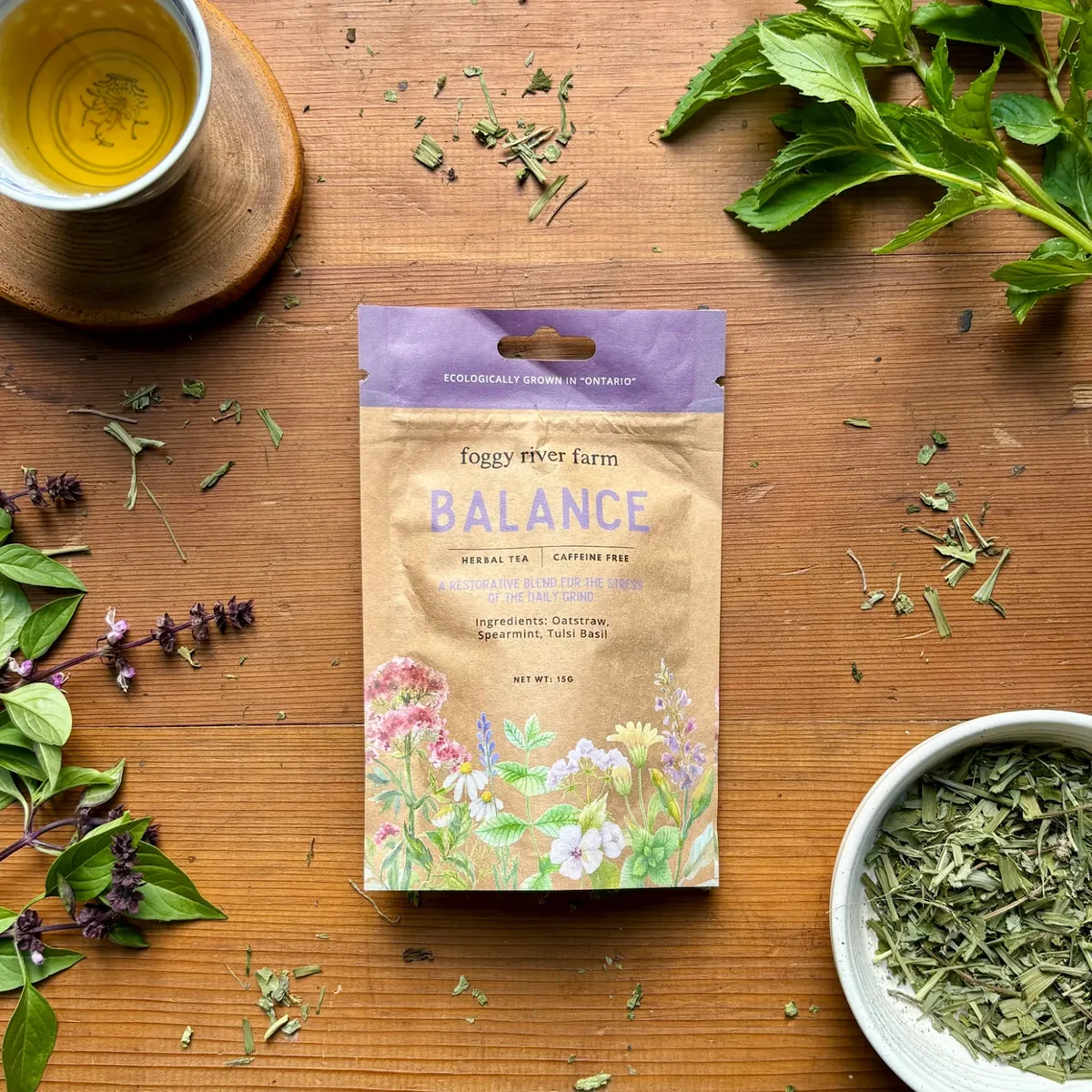
Foggy River Farm (Uxbridge, Ontario)
- Small-scale regenerative herbal cultivation.
- Tea blends, single herbs, culinary seasonings; mail-order available.
Salaaz hasn't independently audited either operation; their published certifications are the source.
For adjacent reading, see our piece on the supplement-industry regulatory gap, our look at mental-health access, and our piece on alcohol's societal cost framework.