
The Public Health Agency of Canada's mental-health page opens with the line "take care of your mental health the same way you take care of your physical health." The framing is correct; the public health system isn't built to honour it. Physical-health interventions are covered through provincial single-payer; psychological-health interventions, for most adults, are not.
The cost of that gap is measurable. A 2022 Frontiers in Public Health paper put the global cost of depression and anxiety alone at approximately $1 trillion USD per year in lost productivity and healthcare load. The WHO's standing factsheet on suicide names it as a leading cause of death in young people across every measured country and income bracket. In Ontario specifically, CAMH's Ontario Student Drug Use and Health Survey found one in five secondary students reported deliberate self-harm in the past year, and one in six reported serious suicidal ideation.
Two upstream variables that aren't being addressed
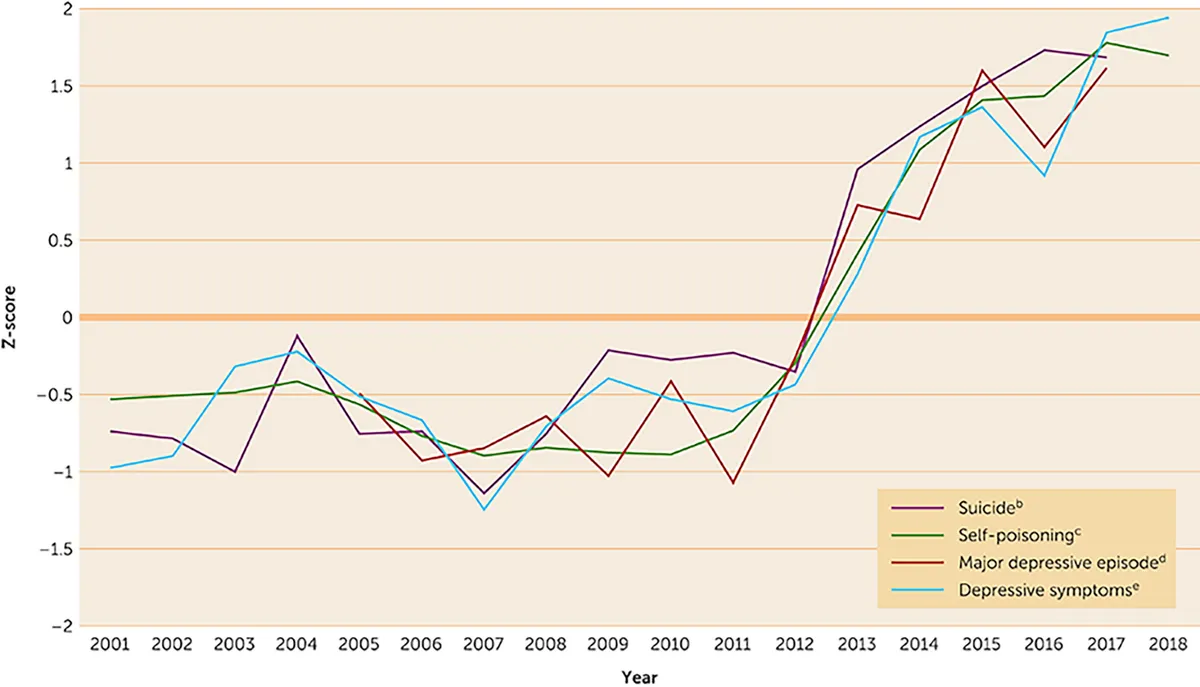
Curriculum. The Ontario secondary curriculum treats mental health as a sub-section of physical and health education rather than as a discipline taught with the rigour applied to mathematics, sciences, or languages. The implicit teaching model is that students will learn coping mechanisms from family, friends, or chance encounters with social media. The cohort effect of that approach is the data point above.
Access pricing. Therapy in Canada typically runs CAD $150–250 per session out of pocket. A 2022 NowToronto survey of 600+ Canadian employees found a clear majority would access mental-health services if cost were not a barrier. Employer-sponsored coverage is the most common access route, which leaves the workers without it — gig, contract, low-wage, and the self-employed — outside the system entirely.

In the absence of curriculum or covered access, the substitute educational input is the social-media feed. A 2024 NIH literature review found approximately 95% of adolescents use at least one social media platform regularly, with mean daily use measured in hours. Whatever else those platforms are doing, they are not teaching coping skills.
One workaround at the access layer
MindBeacon (Canada)
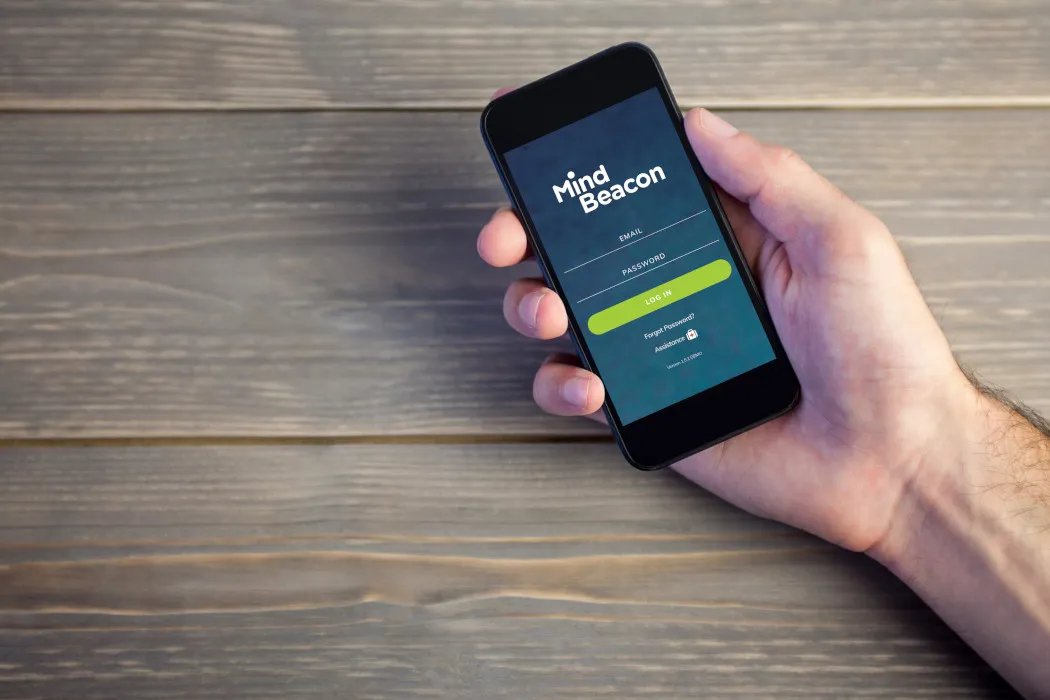
- Registered-therapist-led cognitive behavioural therapy delivered asynchronously by messaging.
- Six-to-eight-week structured programmes; extended access available.
- Per-session cost substantially below private in-person rates.
- Some employer and provincial coverage in select jurisdictions.
Salaaz hasn't independently audited the clinical outcomes data MindBeacon publishes; the company's reporting is the source. The model isn't equivalent to in-person therapy at higher acuity, but it lowers the access floor — which is where the policy gap lives.
What follows
The structural fix is policy: cover therapy through single-payer, teach coping in schools as a standalone subject. Both are tractable; neither is the prevailing direction. In the interim, what's available is awareness of the gap and access to the workarounds that exist.
For adjacent reading, see our piece on how attention-economy products compound the load and the manufactured-demand pattern in body image and dieting.