
The modest fashion industry accounts for roughly 11% of the global apparel market. The remaining 89% trends in the opposite direction: a study published in Sex Roles found that 30% of clothing sold by stores targeting pre-teen and young girls carried sexualizing features — low-cut tops, slogans printed across the seat of pants. Modest dress sits at the edge of a market whose default is its opposite.
The edge is being narrowed by policy as well as design.
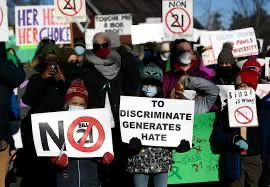
- France banned the abaya and hijab from public-school classrooms in 2023, framing the rule as secular.
- Quebec's secularism bill extends similar logic to public-sector workers; at least 12 Montreal teachers have already lost their jobs under the expanded ban, which originated in the province's earlier religious-symbols law.
- Urumqi, China, outlawed face veils and headscarves outright, enforced by police presence and fines.
- The fashion press has separately reported that the modest-fashion segment itself has narrowed toward westernised silhouettes, squeezing the traditional Muslim dressing it ostensibly serves.
A reframing
A line of feminist criticism — see this Feminista journal essay on the ethics of modest fashion — argues that the dominant market and modest dressing are doing two different things, not ranked one above the other. Mainstream women's apparel is tailored in part to legibility under a male gaze; modest clothing proposes a different relationship to that gaze. The author's argument is that neither posture is empowered by default — the question is whether the wearer chose, and whether the market lets her.
What to look for if you're buying
Brands selling into the modest segment vary widely in how much they disclose. A short checklist that helps separate marketing from substance:
- Manufacturing location named at the city or country level, not "ethically made."
- A specific charitable claim — which charity, what percentage of revenue, audited or self-reported.
- Packaging specifics — biodegradable per which standard? Carbon-neutral verified by which auditor?
- A limited-drops release pattern rather than perpetual new SKUs — the strongest signal against the fast-fashion cycle.
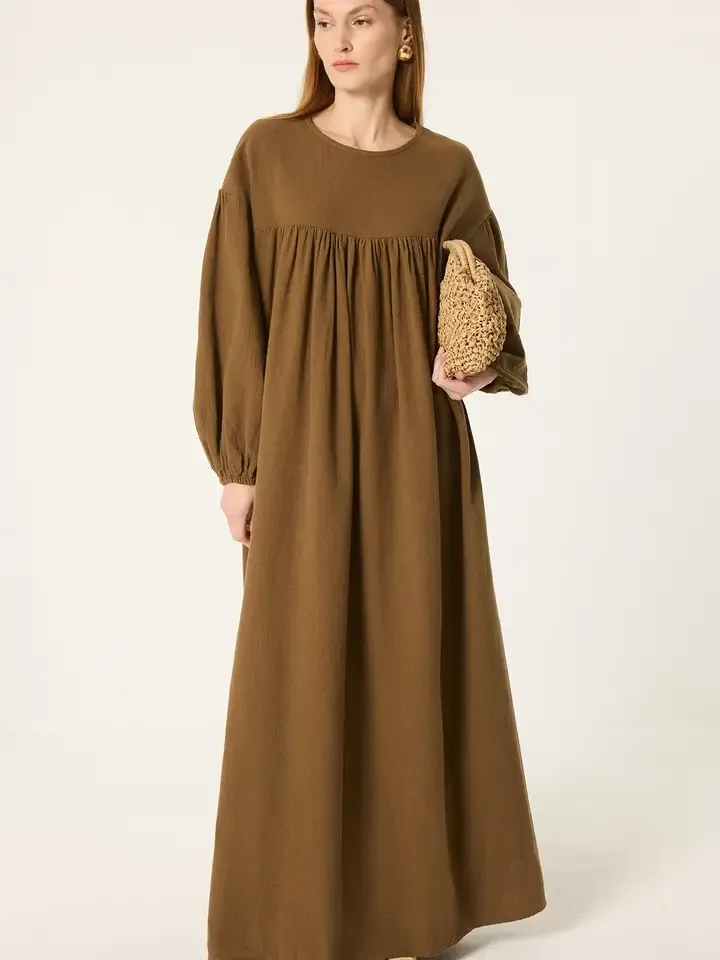
Emaan is one brand that publishes against several of these criteria — full-coverage garments, a stated charitable contribution per sale, "100% carbon-neutral and biodegradable" packaging claims, and a limited-drops release pattern. Salaaz hasn't independently verified the packaging certification or the charity ledger; the brand's own disclosure is the source.

Modest fashion sits at the intersection of three of Salaaz's recurring concerns: supply-chain disclosure, the labour realities of the apparel industry, and the structural overconsumption built into fast fashion. The choice to wear it is a personal one. The choice of where to buy it is the one we can help with — see our framework for evaluating apparel brands.